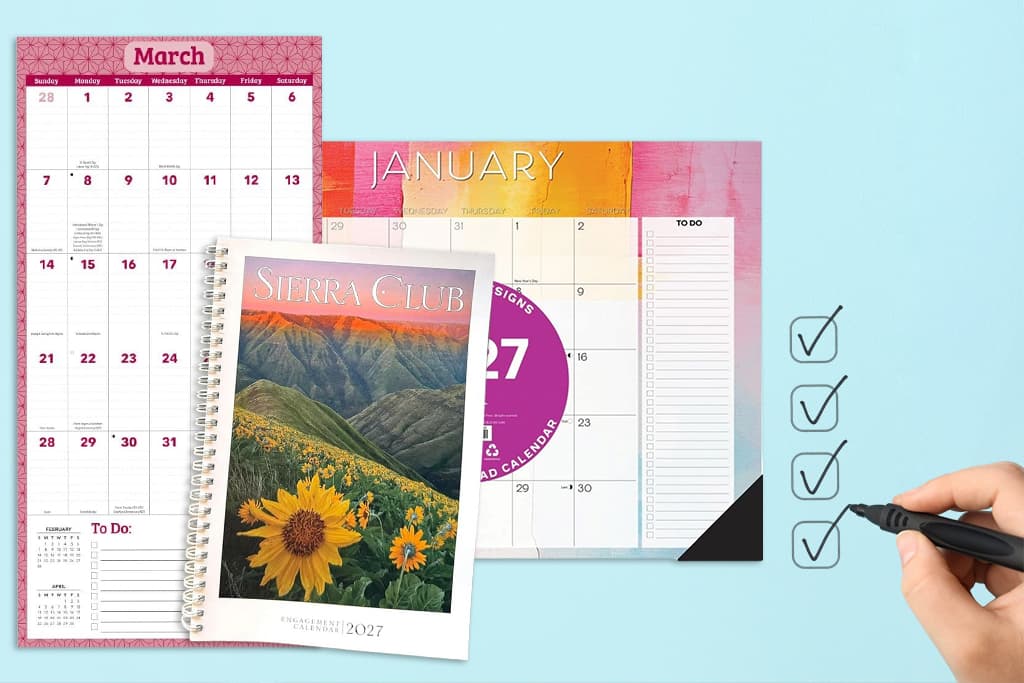
You bought a calendar with the best of intentions. It looked great in the store. You hung it up or set it down, and by February it was covered in dust, or worse, completely blank. Sound familiar? You are not alone, and it is not a willpower problem.
Most of the time, the issue is a mismatch. A calendar that works beautifully for your neighbor might be all wrong for you. If you need to see the whole month at a glance, a tiny pocket planner will frustrate you. If you are always on the move, a big wall calendar will not travel with you. The format matters just as much as the design.
The good news is that choosing the right one is easier than you think. In this guide, you will learn how to match a calendar to your habits, your space, and your goals. By the end, you will know exactly what to look for as you shop for 2027 calendars, and you will feel confident that the one you pick will actually get used.
Start With How You Actually Live
Before you compare formats, take a quick look at your own routine. The best calendar is not the prettiest one. It is the one that fits into your day without extra effort.
Notice Where You Look Every Day
Think about the places your eyes land naturally. Maybe it is the kitchen wall where you grab your coffee. Maybe it is your desk, where you sit down for hours at a time. Maybe it is your bag, since you check your schedule on the go.
A calendar only works if you see it. Place it where your habits already take you, and you will not have to build a new one.
Match the Calendar to Your Planning Style
Some people love big-picture planning. They want to see the whole month, spot busy weeks, and plan ahead. Others need to break every day into small tasks and time blocks.
Ask yourself which sounds more like you:
- Do you think in months and weeks? You will likely love a format that shows lots of dates at once.
- Do you think in hours and to-do lists? You will probably want more writing space for each day.
Knowing this one detail will narrow your choices fast.
Be Honest About Your Habits
This part takes a little kindness toward yourself. If you have never carried a paper planner in your bag, a planner may not be the answer this year. If you forget to look at your desk calendar, move it somewhere more visible.
You do not need to become a different person to stay organized. You just need a format that works with the person you already are.
Pick the Format That Fits Your Space and Routine
Each calendar format has its own strengths. Here is how to tell which one belongs in your life.
Wall Calendars: Best for Shared, Big-Picture Planning
If you want everyone in the house to see what is coming, wall calendars are hard to beat. They give you a large, open grid where you can see the whole month in one glance. That makes them ideal for tracking school events, appointments, bills, and birthdays.
Wall calendars are also great for visual thinkers. You can spot a packed week at a glance, and you can plan around it. Because they stay in one place, they become a natural gathering point for family planning.
Choose a wall calendar if you:
- Share a household schedule with others.
- Like seeing the full month at once.
- Have a spot in your home that gets daily foot traffic.
Desk Calendars: Best for Focused Daily Work
If you spend a lot of time at a desk, desk calendars put your schedule right where you need it. They sit on your workspace, so you can check deadlines and add notes without opening an app or leaving your task.
Desk calendars come in several styles. Some show a full month. Others offer a page for each day, which is perfect if you like a fresh start every morning. Many also double as decor, so you get something useful and something nice to look at.
Choose a desk calendar if you:
- Work from a home office or a regular workstation.
- Want quick reminders in your line of sight.
- Enjoy tearing off or flipping a page each day.
Mini Calendars: Best for Small Spaces and Simple Needs
Not everyone has room for a big calendar. That is where mini calendars shine. They are compact, affordable, and easy to tuck into a locker, a cubicle, a dorm room, or a small corner of your home.
Mini calendars are also wonderful for people who just need a quick date reference. If your appointments live on your phone and you simply like having a pretty calendar nearby, a mini version is a smart choice. They also make great gifts, since they are easy to give and easy to place.
Choose a mini calendar if you:
- Have limited wall or desk space.
- Want a simple date reference without lots of writing room.
- Like to display art or photography in a small footprint.
Planners: Best for Detailed, On-the-Go Organizing
If your life is packed with meetings, tasks, errands, and goals, planners give you the room to manage it all. Most include monthly overviews plus weekly or daily pages, so you can zoom in and out as needed.
Planners are portable, which means your whole schedule goes where you go. Many also include extras like goal pages, note sections, and habit trackers. If you like putting pen to paper, the act of writing things down can help you remember them better, too.
Choose a planner if you:
- Juggle many commitments and deadlines.
- Need space for notes, lists, and goals.
- Want your schedule with you at all times.
Match Your Calendar to Your Role in Life
Your daily responsibilities shape what you need from a calendar. Here are a few common situations and what tends to work best.
For Busy Families
When several people share one schedule, visibility is everything. A large wall calendar in a central spot keeps everyone on the same page. Look for one with big date boxes and room for multiple entries per day. Some families even assign a color to each person, which makes the month easy to read in seconds.
For Professionals and Remote Workers
Your day likely runs on deadlines and meetings. A desk calendar gives you a constant visual reminder, while a planner helps you break big projects into smaller steps. Many professionals use both. The desk calendar tracks the big dates, and the planner tracks the daily details.
For Students
Students need to track assignments, exams, and activities, often across several classes. A planner with weekly pages works well for homework and study schedules. A mini calendar or small wall calendar in a dorm or bedroom adds a quick view of the semester so due dates never sneak up on you.
For Creatives and Goal Setters
If you are working toward something, like a new business, a fitness goal, or a creative project, you need a calendar that inspires you. Look for designs you love, with space to track progress. Seeing your streak build day after day is a powerful motivator.
Pro Tip: Do a one-week test before you commit. Think about how you plan right now. Do you glance at the date, write down tasks, or map out your whole month? Notice what you reach for most often. Then choose the format that matches that habit. A calendar that fits what you already do is far more likely to last all year.
Check the Details That Make a Calendar Easy to Use
Once you know your format, a few small details can make a big difference in how often you actually use it.
Check the Grid Size
Look at the space in each date box. If you write a lot, you need more room. If you only jot down a word or two, a smaller grid is fine. A calendar with tiny boxes can feel frustrating fast, no matter how pretty it looks.
Look at the Layout
Think about how the pages are arranged. Do you want a week to start on Sunday or Monday? Do you prefer a vertical or horizontal layout? Does the calendar include extra space for notes? These small features shape your daily experience more than you might expect.
Consider the Theme and Design
Yes, looks matter. You are more likely to use a calendar you enjoy seeing. Pick artwork, photography, or a style that makes you smile. A calendar you love becomes part of your space instead of something you forget about.
Combine Formats for a System That Sticks
Here is something many organized people already know. You do not have to choose just one format. In fact, using two can make your whole system stronger.
Try a Big Picture Plus Daily Detail Setup
Pair a wall calendar with a planner. Use the wall calendar for shared events, holidays, and major deadlines. Use the planner for daily tasks, errands, and personal goals. This way, you get the full overview and the fine details without overcrowding either one.
Try a Desk and Mini Combination
Keep a desk calendar for your work schedule. Then add a mini calendar at home for personal dates, like birthdays and appointments. This keeps your work life and home life neatly separated, which can help you relax when the workday ends.
Pro Tip: Give each calendar one clear job. For example, your wall calendar might only track family events, while your planner holds your personal to-do list. When every calendar has a purpose, you will never wonder where to write something down.
Get a Head Start With 2027 Calendars
The best time to set up a new system is before the year begins. A fresh calendar feels like a clean slate, and that sense of possibility can give you real momentum.
Shop Early for the Best Selection
Popular designs and formats tend to go quickly as the new year approaches. When you browse 2027 calendars early, you get more choices in themes, sizes, and layouts. You also give yourself time to think through your decision instead of grabbing whatever is left.
Set Up Everything in One Sitting
When your new calendar arrives, take twenty minutes to fill in the basics. Add birthdays, anniversaries, holidays, school breaks, and any known deadlines. Starting the year with these dates already in place makes the calendar useful from day one, and that early win builds the habit of checking it.
Make It Easy to Keep Up
Keep a pen or pencil right next to your calendar. Choose a daily moment to check it, like when you pour your morning coffee or shut down your computer. Small routines like these turn a calendar from a decoration into a tool you rely on.
Your Quick Action Plan
Choosing the right calendar does not have to feel overwhelming. Here is a simple way to move forward.
Recap the Key Points
Start with your real habits. Notice where you look every day and how you like to plan. Then match that to a format. Wall calendars are great for shared, big-picture planning. Desk calendars keep your schedule in front of you while you work. Mini calendars fit small spaces and simple needs. Planners handle detailed schedules and goals on the go.
Take These Next Steps
- Think about where you will place your calendar and who will use it.
- Decide whether you plan by the month, the week, or the day.
- Pick the format that fits both answers, or combine two for a stronger system.
- Browse 2027 calendars and choose a design you will love seeing all year.
- Fill in your key dates as soon as it arrives.
You do not need a perfect system. You just need one that feels natural. Pick the format that matches your life, set it up with care, and let it work for you. A little planning now can make every month of the new year feel calmer and more under control.
