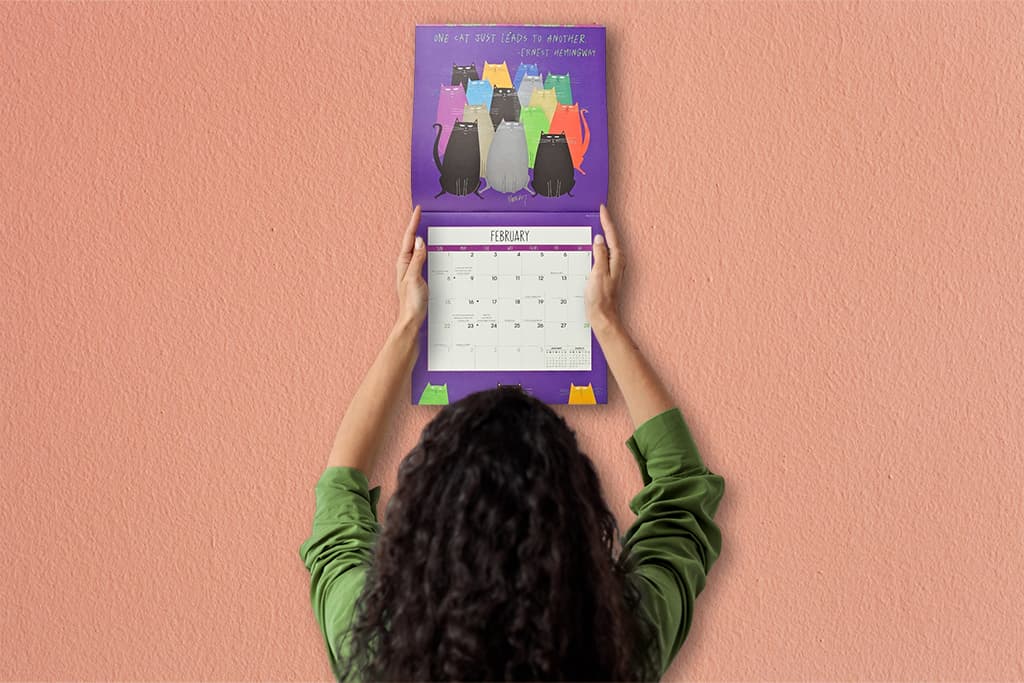
We've all been there. You're standing in front of a blank wall with a new wall calendar in hand, wondering where it should go and what's going to hold it up. Maybe you rent and can't put holes in the wall. Maybe your calendar doesn't even have a hanging hole.
Good news: hanging a calendar is easy once you know what works for your wall. Here's how to pick the right spot, the right hardware, and a few creative options if a nail isn't in the cards.
The short answer: Hang your calendar so the center sits 57 to 60 inches from the floor. Pick a spot you can't walk past without seeing it, like next to a light switch. On drywall, a small finishing nail or an adhesive hook works for most calendars. For a finished look that lasts for years, put it in a wall calendar frame.
Where to Hang a Calendar in Your Home
Get the Height Right
For most adults, the sweet spot is 57 to 60 inches from the floor to the center of the calendar. That keeps it at eye level. If you'll mostly look at it while sitting, like above a desk, go a little lower at 48 to 54 inches. Hanging for kids too? Drop it a few inches so everyone can read it.
Put It Where You Already Pause
A calendar only works if you see it. "Somewhere I pass every day" sounds right, but it's easy to walk right by a calendar you pass. The better test is a spot you have to stop at. Next to the light switch is a great one: you reach for it every time you walk in, so your eyes land on the month without trying.
Where not to hang it: on a door or behind one. A door that swings open hides the calendar half the time, and the space behind a door is out of sight completely.
A few rooms where this works well:
- Kitchen: the best spot for a shared family calendar. Try the wall by the light switch or near the coffee maker.
- Home office: keeps deadlines in view while you work.
- Entryway or mudroom: next to the switch or the key hooks, for a quick check before you head out.
- Bedroom: makes planning part of a calm morning routine.
Mind the Light
Natural light makes a calendar easier to read, but all-day direct sun will fade the colors. A wall that gets indirect light is ideal. Skip spots right next to the stove or shower, where grease and steam can curl the pages.
How to Hang a Calendar Without Nails or Damaging Your Walls
Renting, just painted, or don't want holes? These options hold a calendar securely and come off clean.
Removable Adhesive Hooks
Small adhesive hooks and strips, like Command hooks, are the go-to for most people. Most wall calendars are light, so a small hook is usually plenty. Check the weight rating on the package to be sure. Clean the wall with rubbing alcohol first, press the hook firmly for 30 seconds, and wait an hour before hanging your calendar.
If Your Calendar Has No Hanging Hole
Clip a binder clip to the top center of the calendar and hang the clip's wire loop on a hook. For a cleaner look, use a skirt or pants hanger with two clips. It holds the calendar flat and hangs from any hook.
Over-the-Door Hangers
An over-the-door hook needs no tools and no holes, so it's a handy fallback for renters. Just know the tradeoff: a calendar on a door is easy to miss. If you go this route, pick a door that stays closed, like a pantry, and hang it on the side you face.
Magnetic Clips
Magnetic clips work on a fridge, a metal door, or a magnetic board. Or skip the hardware and go with a magnetic calendar made to stick right on.
Hanging Methods by Surface Type
Drywall
For most calendars, a small finishing nail or an adhesive hook works well. Push pins hold, but they can tear the page over time. For heavier styles like 18-month calendars, use a plastic anchor with a screw, or mount into a stud.
Plaster Walls
Plaster cracks easily, so go slow. Put painter's tape over the spot, pre-drill a small hole with a carbide-tipped bit, and use an anchor made for plaster.
Brick and Concrete
Use a hammer drill with a masonry bit, insert a masonry anchor, then screw in your hook. This is the best option for garages, basements, and workshops.
Wood Paneling
Wood is the easiest surface to work with. A small screw, a decorative hook, or even a staple will hold a lightweight calendar.
Tile
Suction-cup hooks or adhesive hooks made for bathrooms work best. If you have to drill, cover the spot with painter's tape, use a carbide-tipped bit, and go slowly to avoid cracking the tile.
Wall Calendar Frames and Hangers
If you hang a calendar in the same spot every year, a frame is worth a look. It keeps the pages flat, protects the edges from curling and tearing, and makes your calendar look like it belongs on the wall. When the year ends, you slip the new calendar in and the frame stays put. It's a one-time purchase you'll use for years.
Frame or Hanger?
A frame surrounds the calendar on all four sides, like a picture frame. A hanger is a decorative metal bar that your calendar's hanging hole slips over, so the calendar hangs from the top with nothing around the edges. Frames give a more finished look for living rooms and entryways. Hangers are lighter, cost less, and work with more calendar sizes.
Our Frame Styles
- Classic Wood: solid pine with beveled edges in Oak, Black Diamond, and Vintage Red. A traditional look that suits kitchens, family rooms, and farmhouse spaces.
- Contemporary: a flatter, cleaner profile in Black or White for modern rooms.
- Slim Vertical: built for tall, narrow calendars, and a good fit for the narrow wall next to a door frame or light switch.
- Wrought Iron: decorative scrollwork with a mesh basket at the bottom for mail, keys, or pens.
- Iron Hangers: Scroll, Flower, Heart, and Home designs in black iron, plus a Geo hanger in gold. Each needs just one nail or hook.
One more thing: wood frames don't include hanging hardware. A small nail or an adhesive hook rated for the frame's weight works on drywall. For plaster or masonry, follow the surface tips above.
Hang it once, keep it for years. Wood frames, wrought iron, and iron hangers, each matched to your calendar's size.
Shop Calendar FramesCreative Ways to Hang a Calendar
A calendar doesn't have to hang from a single nail. A few ideas that look good and stay practical:
- Clipboard: clip your calendar to a clipboard and hang it from one hook. Easy to take down and write on.
- Pants hanger: hang it from a peg or a single hook.
- Decorative hanger: an iron calendar hanger gives the top edge a finished look without a full frame.
- Pegboard: great in a home office or craft room, next to your other supplies.
- Cork board: pin your calendar in the middle and keep notes and invitations around it.
- By the light switch: a mini wall calendar fits the narrow strip of wall next to a switch plate.
- Gallery wall: if you love the artwork, work your calendar into a group of frames.
- Skip the wall: a desk calendar on an easel stand works on a shelf or counter.
Special Situations
Using More Than One Calendar
In a busy household, one calendar may not cover it. Pair a large family calendar with a smaller one for notes or a second schedule. Hang them at the same height with 2 to 3 inches of space between them so they read as a set.
Swapping Calendars Each Year
If you change calendars every year, plan for it. Keep the same hooks in place, choose a hook with a little extra room so it fits different styles, and lightly mark your ideal spot in pencil for next time. A frame makes this even easier, since it stays on the wall and only the calendar inside changes. Not sure your new calendar will fit the space? Our wall calendar sizes guide breaks down the common dimensions.
Common Calendar Hanging Mistakes
- Too high: if you have to tilt your head back to read it, lower it.
- Crooked: use a level, or line it up with a nearby door frame.
- Out of sight: on a door, behind a door, or anywhere you can walk past without looking.
- Wrong spot: avoid steam, grease, and busy corners where it gets bumped.
- Weak support: match your hardware to the calendar's weight. If it keeps ending up on the floor, see the fixes below.
Why Your Calendar Keeps Falling Off the Wall (And How to Fix It)
A calendar that won't stay up almost always fails in one of a few places. Figure out which one, and the fix is usually quick.
The Hook Came Off the Wall
This is the most common one, and it's usually the wall, not the hook. Adhesive can't grip dust, glossy paint, or a textured surface. Humidity loosens it, and cold walls in winter can make it stiffen and let go.
- Clean the spot with rubbing alcohol, let it dry, and wait an hour before hanging anything.
- On textured walls like knockdown or stucco, skip adhesive and use a small nail or an anchor.
- Check that the hook's weight rating covers your calendar, especially thick art calendars or 18-month styles.
The Hanging Hole Tore
If the calendar is on the floor but the hook is still on the wall, the paper gave out. Every page flip pulls on that little hole.
- Before you hang it, put a hole reinforcement sticker (the kind made for binder paper) or a piece of clear tape over the hole.
- When you flip to a new month, hold the top of the calendar with one hand and turn the page with the other.
- Use a thin nail or a slim hook. A thick nail stretches the hole and tears it faster.
It Keeps Sliding Off the Hook
If the calendar slips off every time you flip it, the hook is too shallow. Angle a nail slightly upward so the calendar settles against the wall, or switch to a hook with a deeper curve or a lip at the end.
How to Hang a Spiral Calendar
Spiral-bound calendars are the ones most likely to hang crooked or tear. Instead of hanging from the paper, slide a small binder clip or paper clip through the top of the coil and hang the clip on your hook. The wire takes the weight, not the page, and the calendar hangs straight.
The Pages Curl or Sag
Curling usually means humidity. Move the calendar away from steam, vents, and windows, and keep air moving in damp rooms. For a calendar that sags, tape a thin piece of poster board to the back cover to give it some structure. On a mini calendar, a small dab of removable mounting putty behind the bottom corners keeps it flat against the wall. For a calendar you hang in the same spot every year, a wall calendar frame solves curling and falling at the same time.
Keep It Up All Year
Give the hook a quick check each time you flip to a new month. If it feels loose, replace it now, before it falls. Keep your calendar out of direct sunlight to prevent fading, and dust it with a microfiber cloth now and then.
Frequently Asked Questions
How high should you hang a wall calendar?
Hang it so the center is 57 to 60 inches from the floor, which is eye level for most adults. Above a desk, 48 to 54 inches works better.
How do you hang a calendar without nails?
Use removable adhesive hooks, an over-the-door hanger, or magnetic clips. All three hold a calendar securely without putting holes in your wall.
How do you hang a calendar that doesn't have a hole?
Clip a binder clip to the top center and hang it on a hook, or use a pants hanger with clips. Both keep the calendar flat and easy to flip.
Will adhesive hooks damage my walls?
Not usually. Clean the wall before you apply the hook, and when you remove it, pull the tab slowly straight down along the wall. Freshly painted walls should cure for about a week before you use adhesive.
Where is the best place to hang a calendar at home?
Somewhere you have to stop, not just pass. Next to a light switch works well because you see it every time you walk in. Avoid doors and the space behind them, where it's easy to miss.
Why does my calendar keep falling off the wall?
Usually one of three things: the adhesive can't grip the wall because of dust, texture, or humidity; the hanging hole tore from page flips; or the hook is too shallow and the calendar slides off. Clean the wall before using adhesive, reinforce the hole, and use a deeper hook or a nail angled slightly up.
How do you hang a spiral calendar?
Slide a small binder clip or paper clip through the top of the spiral coil and hang the clip on a hook or nail. The wire holds the weight instead of the paper, so the calendar hangs straight and won't tear.
Should I put my calendar in a frame?
If you hang a calendar in the same spot every year, a frame is a good investment. It keeps the pages flat, protects the edges, and stays on the wall while you swap in a new calendar each year. Just match the frame to your calendar's hanging size.
Ready for 2027?
Now that you know where it's going, find the calendar to hang there.
